

Advancing decarbonization in Czechia with calcined clay
Harnessing our formulation expertise to decarbonize our cement and concrete is one of the key pillars of Holcim's industry-shaping sustainability roadmap. An important supplementary cementitious material that we use is calcined clay, a mineral powder obtained through the calcination of natural clays at a relatively low temperature.
Calcined clay is helping us to scale our offering - to meet our customers' most ambitious needs as we build the NextGen cities of the future.
Since the launch of Europe’s first dedicated calcined clay cement production line at our plant in Saint-Pierre-la-Cour, France in 2023, we’ve been building new lines and retrofitting existing clinker kilns to produce calcined clay from Ecuador and Mexico to Egypt and Spain. Our latest calcined clay line is a new, state-of-the-art facility in Cížkovice, the Czech Republic.
First calcined clay production installation in the Czech Republic
Supported by the Modernization Fund of the Czech Environment Ministry
Reduction of ECOPlanet1, Holcim's low-carbon cement, carbon footprint by ~30% compared to CEM I / OPC cement
Bringing calcined clay to THE CZECH REPUBLIC
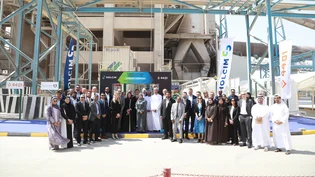
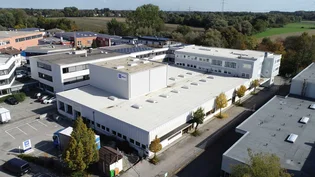
In September 2026, Holcim Czech Republic launched the nation's very first calcined clay production line at our Čížkovice cement plant, using technology patented by Holcim’s R&D teams.
The project represents the largest investment in the history of Holcim Czech Republic, worth approximately CZK 1 billion (CHF 40 million), with CZK 330 million (CHF 13 million) provided by the Modernization Fund of the Czech Republic’s Ministry of the Environment.
This cutting-edge technology makes it possible to partially replace clinker, a key emissions-intensive component of cement, with calcined clay - to reduce the cement’s carbon footprint by around 30% compared to ordinary CEM I / OPC cement, without any compromise on performance.


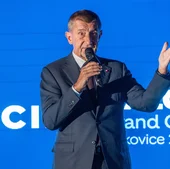
This project is proof that Czech industry can be modern, competitive and environmentally responsible at the same time. This is exactly the kind of investment our country needs. It combines technological innovation, the use of domestic resources and investments in the future.

The commissioning of this new calcined clay line is an important step for Holcim to scale up next generation ECOPlanet low-carbon cement as an innovative solution to meet our customers’ most ambitious goals, as the leading partner for sustainable construction.
Europe's first dedicated calcined clay production line
We launched Europe’s first dedicated calcined clay cement production line in Saint-Pierre-la-Cour, France in 2023, to enable Holcim France to produce 500 000 tons of calcined clay per year by 2030. The line is powered by 100% biomass-based alternative fuels and waste heat-recovery systems, making the manufacturing of calcined clay nearly carbon-free. We're also retrofitting existing clinker kilns to produce calcined clay from Ecuador and Mexico to Egypt and Spain.
HOW IS calcined clay Produced?
Clinker, the main component of cement, is produced by firing limestone and other raw materials at temperatures of around 1 400 °C. Clinker production is therefore the main source of emissions in cement manufacturing: CO2 is generated both by fuel combustion and by the chemical decomposition of limestone. By contrast, calcined clay is processed at a significantly lower temperature, approximately 800 °C, and after firing becomes a reactive mineral component that can replace part of the clinker. This reduces the clinker content in cement and, with it, the carbon footprint of the resulting product, without reducing the required technical properties.
In the case of our new calcined clay production line in Čížkovice, the CO2 savings amount to approximately 45 000 tons per year, an environmental benefit roughly equivalent to planting two million new trees.
Another major advantage is that we have high-quality clay in our own quarry only about three kilometers from the Čížkovice plant, shortening the supply chain and reducing environmental impacts.
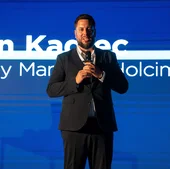
We transport the calcined clay to our plant by conveyor belt. Thanks to our local raw material supplies, we have greater control over both availability and quality, and reduce the risk of future dependence on imports. Combined with the new technology, this strengthens the long-term competitiveness of the plant and the Czech cement industry.
Čížkovice is already leading on the energy side of our two-pronged decarbonization strategy, with alternative fuel usage above 95% and approaching 100%. With this new calcined clay line, the site will now lead on both fronts: energy and formulation. Čížkovice and the Czech Republic are flying the flag for Holcim in Europe, at the forefront of the region's “cleantech” transformation.
Our stories