

Newbold Quarry: a science-led journey to nature restoration

TOM REDFERN
Head of Sustainability at Holcim UK
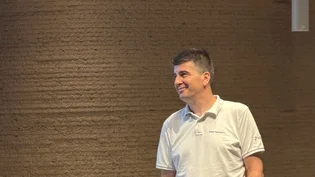
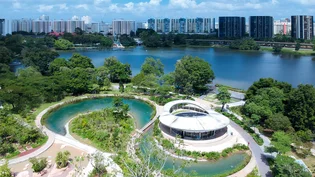
“The past and present of Newbold Quarry near the English town of Burton upon Trent is a lighthouse example of transformative rehabilitation and how we can leave nature in a better state than when we found it,” says Tom Redfern, Holcim UK’s Head of Sustainability.
Follow him to this site and you’ll see how approximately 44 of former aggregate extraction locations are now a thriving natural habitat – home to rare and protected species – thanks to our industry-shaping sustainability roadmap, as part of our NextGen Growth 2030 strategy.
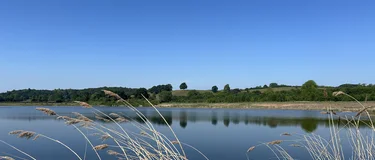
11 hectares of vital wetland and woodland habitats rehabilitated to support the local biodiversity
Restoration guided by community expectations to also create public value
The restoration demonstrates the science-led approach behind Holcim’s nature targets
Newbold Quarry’s progressive transformative rehabilitation
For decades, Newbold Quarry was a vital source of construction materials, but now the quarry is nearing the end of its lifecycle. Guided by our Nature Strategy, this post-extraction land served as a strategic opportunity for ecological improvement and community value.
“By embracing a science-based methodology in progressive, transformative rehabilitation, we set out to create from scratch a thriving environment for both biodiversity as well as the local residents,” Tom explains.
The Holcim UK team saw an opportunity to go beyond traditional rehabilitation. They successfully established entirely new habitats, such as vital wetlands that were not originally present, and which now support vital ecosystems in the region. It has also been designed to fit in with the wider Trent Valley Living Landscape, supporting nature restoration at scale.
This biodiversity-rich landscape benefits more than just the wildlife it supports. It also contributes to essential ecosystem mechanisms, including carbon sequestration and natural water storage, which are critical to build our cities’ resilience.


Science-based Landscape Modeling
Transforming a former quarry into a self-sustaining ecosystem relies on patience and ecological collaboration. To ensure long-term resilience, Tom and his team used detailed modeling to set out the final landform.
“This involved a 12-to-14 months planning window to conduct environmental research and raise large voids with inert material before any ecological work could begin. Once the correct levels were reached, planting, seeding, and soft landscaping were introduced in a controlled way,” Tom explains.
Following Holcim’s science-based approach, the team prioritized site hydrology as the essential foundation for a thriving wetland. Because land rarely behaves in a predictable way, the project embraced a continual cycle of learning.
Subsurface conditions often became clear only once excavation began, requiring the team to remain flexible. Methods and timelines were frequently adjusted to respect natural rhythms, such as nesting seasons and seasonal ground conditions.
Newbold Quarry now provides the specific habitats required for wading birds – including the rare black-necked grebe – to thrive. On land, the site’s calcareous grasslands support important wildflowers such as the bee orchid, demonstrating how former quarries can be reshaped into rich natural assets.
A Community-led Ecosystem
For Tom, restoration is about building a nature-positive future together with the local communities. The Newbold project was shaped by the Newbold Quarry Liaison Group, which provided a direct link between Holcim UK and the locals.
Today, the wetland features walking trails, viewing points, and educational signage. These features encourage residents to explore the landscape and understand its transformation, fostering a sense of connection to their environment.
“I’m extremely proud of the work the Holcim UK team delivered here at Newbold Quarry. It’s a prime example of how, when restored well, former extraction sites can become meaningful contributors to the local environment and host much more flora and fauna than before quarrying began. It serves as a lighthouse for our Nature Strategy, proving how transformative rehabilitation can deliver a positive impact on biodiversity and help build a nature-positive future,” Tom concludes.
Our stories