

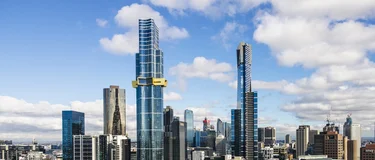
Bringing NextGen Growth to life in Australia
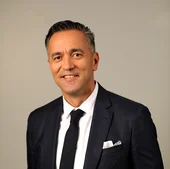
GEORGE AGRIOGIANNIS
CEO of Holcim Australia
and New Zealand
Growing in the most attractive markets is central to Holcim’s NextGen Growth strategy, and in Asia, Middle East and Africa, Australia is leading the way as sustainability drives profitable growth.
A rising population and rapid urbanization, combined with Australia’s national commitment to net-zero by 2050, is fuelling demand for sustainable infrastructure, industry and buildings in the country, from Melbourne’s Australia 108 and Sydney’s Western Harbour Tunnel.
George Agriogiannis, CEO of Holcim Australia and New Zealand, tells us how his team is making NextGen Growth a reality, as we meet increasing customer demand for our sustainable offering.
Why is Australia such an attractive market for Holcim?
Construction is one of Australia’s most significant economic sectors, and the market is forecast to grow 6.9% in 2026 alone to reach AUD 193 billion, and AUD 256 billion by 2030, as federal and state governments invest in transport, housing, renewable energy and digital infrastructure.
On top of this, Australia has made a national commitment to net zero by 2050. Clearly, this is transforming how the country builds, creating strong, growing demand for the sustainable and circular construction solutions that are central to Holcim’s NextGen Growth 2030 strategy.

Rogers Transport facility in Brisbane built with ECOPact low-carbon concrete

A Canberra Light Rail Stage 2A project with low-carbon Humes precast component.

The Biyal-a Armstrong Creek Library and community hub built with Holcim’s ECOPact low-carbon concrete and Geostone® decorative concrete.
How is sustainability driving profitable growth?
We’re scaling our sustainable offering in Australia – from ECOPact1, Holcim's low-carbon concrete, which already represents 36% of ready-mix net sales here, to Humes precast concrete solutions for industry – meeting demand from large-scale infrastructure projects ranging from the 2032 Brisbane Olympic Games to Western Sydney Aerotropolis.
We’re investing in CAPEX to meet this strong demand. In our Humes business, which offers innovative precast concrete solutions for infrastructure, has opened a new 8 250 m2 purpose-built, highly automated drycast concrete pipe factory at Blacktown in Western Sydney, to serve customers across New South Wales.
Shifting from spun pipe to drycast technology has reduced embodied carbon per tonne, while the new manufacturing process enables significant use of manufactured sand, recycled aggregates and supplementary cementitious materials, reducing reliance on primary materials and advancing Holcim's commitment to circular construction.
Staying ahead of the curve, we’ve also built a new, high-capacity concrete batching plant at Badgerys Creek, within the Western Sydney Aerotropolis growth corridor. Located within 2.5 km of both the new Western Sydney International Airport and the emerging Bradfield City Centre, the plant is uniquely situated inside the 11 200-hectare Aerotropolis development.
Operations are due to begin in mid-2026, when we will be able to supply up to 1 000 m3 of concrete per day to the massive residential, commercial, and industrial projects driving the region's urban transformation.
We’re also investing in renewable energy sources. In 2025, our Byron Bay Concrete Plant officially switched to 100% renewable energy, eliminating all Scope 2 CO₂ emissions from the site. To supply projects in remote locations, we are deploying renewable-powered, hybrid mobile concrete plants that significantly reduce fuel use and emissions.
As we decarbonize our mobility, we worked with Putzmeister Oceania to trial the first Australian Design Rules (ADRs) approved and road registered 100% electric concrete truck mixer. We’ve also retrofitted diesel trucks to run as hybrid hydrogen vehicles and transport quarry materials to our concrete plants, significantly reducing fuel consumption and emissions.
What are you doing to advance circular construction?
We’re supporting Holcim’s group ambition to advance circular construction and build cities from cities leveraging our ECOCycle circular technology. We launched ECOCycle2, Holcim's proprietary circular technology, here in June 2026, and our ambition is to recycle two million tons of construction demolition materials (CDM) per year by 2030. Solutions with ECOCycle inside – concrete and aggregates – contain from 10% and 100% recycled CDM, and are independently verified to ISO 14021, with no compromise on quality or performance, to help our customers achieve their most ambitious sustainability goals.

The Melbourne Metro Tunnel features the world-first use of structural-grade concrete with recycled glass in an infrastructure project.

In Queensland, Holcim supplied Kidston Pumped Hydro with 100% recycled aggregates.
How are you expanding high value building solutions?
From infrastructure and industry to buildings, Holcim’s sustainable building solutions are playing a central role in some of Australia's most significant projects.
Industry
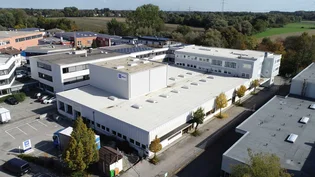
The new state-of-the-art 18 000 m2 Rogers Transport facility in Brisbane supports bulk and pallet storage for customers across a wide range of industries. Holcim worked with principal contractor FKG to supply more than 6, 000 m3 of ECOPact low-carbon concrete to support the client’s sustainability ambitions for their new warehouse.
For the Alkimos Seawater Desalination Plant in Perth – Western Australia's next major water source – Holcim is supplying both ECOPact and standard concrete. The Bohle Hydrogen Hub in North Queensland, built with ECOPact, signals the role low-carbon concrete will play in Australia's emerging clean energy economy.
Infrastructure
In Victoria, Holcim supplied more than 600 000 m³ of low-carbon concrete to the Melbourne Metro Tunnel, including world-first circular innovation using recycled crushed glass to replace up to 50% of virgin natural sand. We are now supplying 300 000-350 000 m³ of ECOPact to the North East Link, Victoria's largest ever road project.
In New South Wales, ECOPact has been specified across multiple packages of the Sydney Metro, including station boxes, terminals and eastern tunnelling. The new 15.5km City and Southwest line will move up to 34 000 people per hour - equivalent to the passenger volume on London’s Victoria Line. We are a primary supplier for Sydney’s transformative Western Harbour Tunnel project that creates a western bypass of the Sydney CBD to improve transport capacity in and around Sydney Harbour. In Australia’s capital, the Canberra Light Rail Stage 2A project extends the city's tram network and storm resilience using low-carbon Humes precast components.
Holcim is a ready-mix concrete supplier for HumeLink, one of Australia's most significant energy infrastructure projects. In Queensland, Holcim has supplied the Kidston Pumped Hydro Energy project since 2018, with 100% recycled aggregates used in all concrete supplied across the surface works and the 2 km underground pumphouse access tunnel.
Buildings
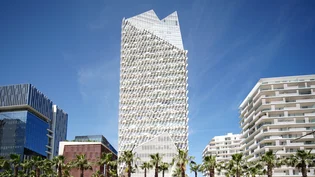
For Melbourne’s Australia 108, the tallest building in the Southern Hemisphere, Holcim supplied more than 45 000m³ of concrete, including over 8 000m³ of DYNAMax for the core and structural columns from level 67 upwards. Australia 108 has since won an Award of Excellence from the Council on Tall Buildings and Urban Habitat.
Mosaic Property Group in Queensland used ECOPact across many of their projects, including Luca and the award-winning The Witton, The Manning, and The Mowbray. We are also supplying ECOPact to Oria Spring Hill in central Brisbane and Lakeside Serenity 4212 on the Gold Coast — two flagship developments by innovative property development company Keylin.
Beyond scale, ECOPact is demonstrating that low-carbon construction is the new standard across sectors. The new South Australian Sports Institute (SASI) headquarters, Armstrong Creek Library, Yitpi Yartapuultiku Cultural Centre and GenesisCare Campbeltown Cancer Centre were all delivered using ECOPact, setting a benchmark for sustainable building in sports, community and health.
How are you bringing the Holcim Spirit to life?
Purpose
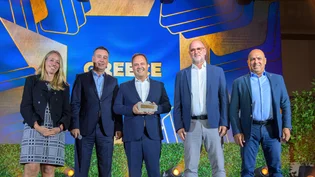
At the inaugural Holcim Spirit Awards, Australia won the “Purpose” category thanks to our leadership in sustainable construction, ECOPact low-carbon concrete sales and the use of CDM.
We are constantly developing innovative solutions to ensure we build progress for people and the planet. Here’s just one example. To protect Victoria's vital wetlands from urban stormwater runoff, Humes successfully deployed its HumeFilter UPT3000 universal pollutant trap for a Victorian local government authority, marking a council first for this space-efficient, triple-stage filtration system, and leading to significant interest from designers and councils.
People
In 2025, the independent Top Employers Institute certified Holcim Australia and New Zealand as a Top Employer. Our diverse and inclusive work environment comes to life through programs like Women on Wheels – which recently expanded from Victoria to train and deploy female truck drivers for major infrastructure projects in rural New South Wales.
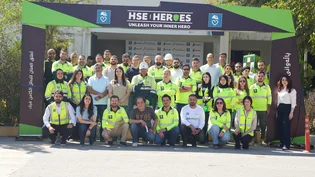
Safety remains our top priority across all our sites, and Holcim Australia was recognized at the 2026 global Health, Safety and Environment (HSE) awards. Petrie Quarry Manager Ian Vernon was named a global HSE Hero for his tenacious approach to engineering risk out at source, successfully reducing dust exposure for drill crews and redesigning site traffic management.
Performance
We have a deeply embedded culture of value creation. To minimize costly rail downtime during BHP's rail bridge replacement in Western Australia's Pilbara region, Holcim's Western Australia ready-mix concrete team partnered with Austral Constructions to develop special concrete mixes that enabled vital rail operations to reopen in just two days, avoiding significant delays and costs for our customer.
We are also partnering to accelerate social impact and bring value to the communities where we operate. Our strategic partnership with Habitat for Humanity Australia focuses on delivering affordable housing solutions and driving inclusive employment within the construction industry, while we are committed to empowering Australia’s Aboriginal communities.

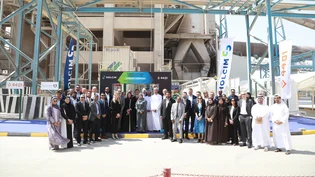
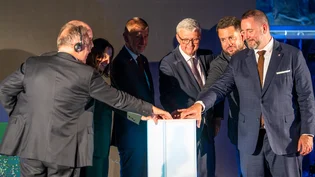
Our CEO, Miljan Gutovic, recently visited the Western Harbour Tunnel project site, meeting with project teams and seeing firsthand the progress being made on this major infrastructure project.

The three Women on Wheels graduates who completed Holcim Australia's first NSW intake, on site at the Central-West Orana Renewable Energy Zone.

In partnership with Habitat for Humanity Australia, Holcim contributed materials to Wirrawee Gunya, a Western Sydney refuge providing culturally sensitive support for Aboriginal women and children.
1ECOPact achieves at least 30% lower GWP (kg CO2e/m3, A1-A3 scope) compared with the applicable Ordinary Portland Cement (CEM I/Type I) concrete reference.
2Guarantees a minimum of 10% and up to 100% recycled construction demolition materials by total product weight.
Our stories