

Ytong: Sustainability makes history in Oslo
In Oslo, Ytong autoclaved aerated concrete (AAC) is meeting the challenge of renovating a historic building complex from 1938 to achieve a prestigious sustainable building certification.
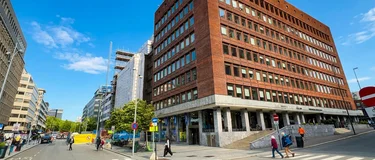
City Hall Passage Rådhuspassasjen is a 10 000 m2 complex of three buildings in Norway’s capital designed by Arnstein Arneberg as an open-air pedestrian walk-through. Over the decades, the passage was closed to the sky, while interior office spaces made poor use of the space.
The current repair and refurbishment project – slated for completion in autumn 2026 – involves removing the 1980s roof, restoring the historic facade and interiors, and reconnecting Oslo’s public spaces. The aim is create a vibrant new mixed-use complex that is much more welcoming and accessible - with modern offices and services, as well as shops, cafés and restaurants.

© Skanska Norway AS

Norway’s premier green building certification
Oslo is targeting carbon emissions at just 5% of 2009 levels by 2030, and to achieve this city planners favor energy-efficient repair and refurbishment rather than new build. As a result, the project developers are targeting Norway’s BREEAM NOR “Excellent” green building certification.
Turning to Xella, part of the Holcim Group, contractor Skanska selected Ytong AAC blocks for the project’s internal walling – prizing their circularity, sustainability and energy efficiency.
Ytong AAC minimizes use of primary materials, is fully recyclable and has extremely low embodied energy. Project Manager Thomas Waeraas also notes the “progress and precision” Ytong brings to this build – crucial given tight deadlines and logistics – as well as cost efficiency.
Introducing Ytong AAC
- Produced with renewable energy and 100% natural materials, Ytong AAC is fully recyclable – as City Hall Passage targets BREEAM NOR “Excellent” certification
- Ytong blocks are engineered for accuracy, and are ideally suited for both new build and repair and refurbishment projects
- Ytong AAC provides outstanding resilience and energy efficiency, lowering heating and cooling costs and ensuring more comfortable spaces
Ytong AAC blocks are made of sand, lime, cement, gypsum and water, with a small amount of aluminum powder. Production involves reacting the aluminum with the other ingredients to create hydrogen, which leaves behind air pockets that make up to 80% of a block’s volume.


Outstanding resilience and energy efficiency
Autoclaving then creates a lightweight, cellular structure that has the strength of stone but is light enough to float on water, providing resilience through strength and fire resistance, as well as high thermal performance, with the cellular structure acting as a build-in insulator.
Delivered in uniform, highly accurate sizes, the AAC blocks ensure incredibly tight joints, and can easily be cut further onsite. This makes Ytong ideal for complex historic buildings like City Hall Passage, where arched walls and narrow passages make traditional masonry a challenge.
City Hall Passage shows the integral part that Holcim’s high-value building solutions, including Ytong, can play in building the NextGen cities of tomorrow, while protecting Oslo’s rich heritage.

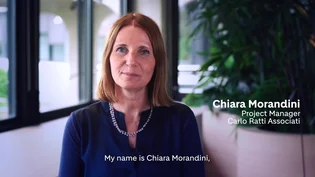
This is a signature building with great historical value, and it is inspiring for us to contribute with smart and sustainable products. Our solutions are designed to meet high standards of precision, quality, and sustainability.
Our stories