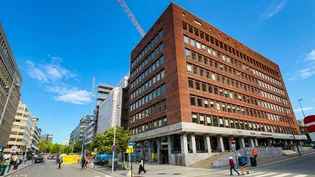


Switzerland is Holcim’s home. It’s where our headquarters is, and where our roots lie. Beyond this heritage, it’s a pioneering market for us in sustainable building innovation – a place where we develop and scale breakthrough innovations with our partners, before exporting them across the world.
What sets Switzerland apart is its stability, reliability, exceptional public transport links and the high level of technical education. We are grateful for these benefits, which have helped us to grow over the past 114 years to become the leading partner for sustainable construction.
Partnering for breakthrough innovations
Holcim benefits from a materials science "knowledge cluster" that is arguably the best in the world. Some of our university collaborations include Zurich University of Applied Sciences, EPFL Lausanne and ETH Zurich, while Holcim MAQER Ventures, which partners with startups worldwide, regularly contributes to academic and industry exchanges.
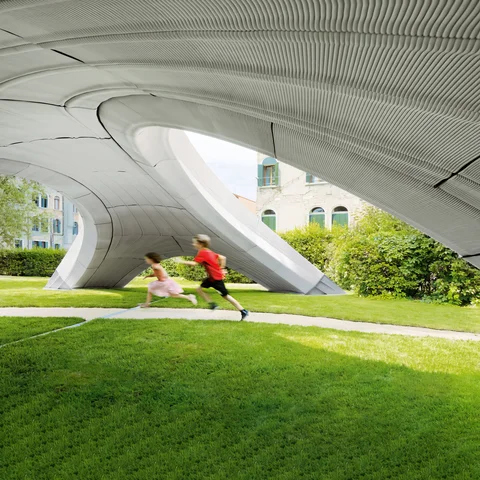
Through longstanding partnerships with top academic institutions, we’ve co-developed innovations ranging from Striatus – the world’s first 3D-printed concrete footbridge and the Rippmann-Floor System – both partnerships with the Block Research Group – to lower-clinker cement, Carbon Prestressed Concrete (CPC) and Susteno resource-saving cement.
Holcim is also committed to scaling our sustainable offering using calcined clay - which can reduce the amount of clinker in cement and halve its footprint with no compromise on performance. The development of LC3 cement with calcined clay was spearheaded by Karen Scrivener, Professor of Construction Materials, EPFL, who we collaborate closely with.

Achieving net zero and building sustainable cities is Holcim’s focus, but we can’t act alone. We need systemic change, and this only happens through deep collaboration across the entire value chain. With our industrial scale, R&D capability, and global reach, Holcim is making sustainable building solutions for NextGen cities practical, accessible, and cost-competitive
We also have strategic partnerships with Swiss startups. CPC AG uses pioneering patented carbon prestressed concrete technology that offers material savings of up to 75% versus conventional construction methods. Holcim acquired the company in full following a successful collaboration and selection of CPC to build the Grüze Innovation Lab in Winterthur, Switzerland.
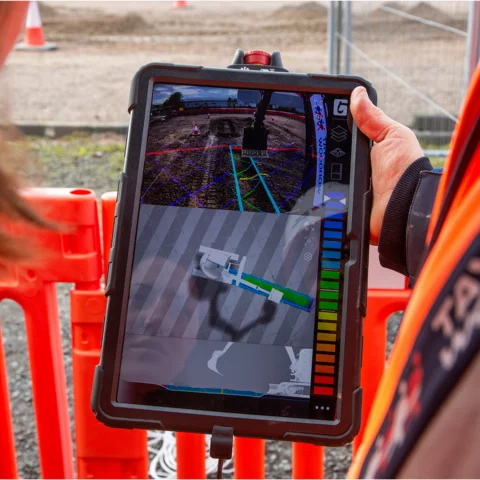
Gravis Robotics is an ETH spin-off focusing on autonomous heavy mobile equipment for construction and quarrying. Holcim started pilot projects with them in 2025 and invested thereafter, and we’re now exploring how we can scale this technology in our quarries.
Holcim has a long history of collaboration with Flyability, an EPFL spinoff that specializes in unique drone technology to inspect and gather critical data in confined or hazardous spaces – where human entry is dangerous or impractical. The technology has even allowed Holcim to create “digital twins” of plants to optimize planning and improve collaboration with contractors.
The Holcim Foundation for Sustainable Construction also works closely with institutions including ETH Zurich, and has hosted fellowships – including the 2025 Emerging Changemakers Retreat in Zurich – for talented built environment professionals. The fellowships empower participants to bridge the gap between education sustainable construction practice, working with academics, other experts and industry.
Launching the world’s first circular cement
Holcim’s launch of ECOPlanet1, Holcim's low-carbon cement, Susteno, the world's first circular cement, in Switzerland in 2018 was a paradigm shift for our industry – proving that what was once seen as construction demolition “waste” were in fact valuable materials that could be recycled into high-quality building solutions.
Before Susteno, building standards in Europe were strictly prescriptive. Standard CEM was defined by a specific set of ingredients. Adding recycled construction demolition materials (CDM) – concrete, mortar, bricks, etc. – above 5% violated the legal definition of cement.
Working with the Swiss authorities and the Swiss Society of Engineers and Architects (SIA), Holcim won regulatory approval under Swiss norm SIA 2049 for its Susteno formulation containing 20% recycled CDM.
This led to the upgrading of the European standard to EN 197-6, legalizing recycled concrete fines as a main constituent – clearing the way for circular cement. A great example of a Swiss Holcim innovation that’s had a transformative effect both here and elsewhere in the world.
Most recently, as we expand our high-value building systems, Holcim Switzerland and Fixit AG have launched the FOME® insulating plaster system, which combines insulation and plaster and can be sprayed directly onto exterior and interior walls. Fully recyclable and entirely mineral based, it can be dismantled and used to create new FOME, or added to cement or concrete.
Zurich leads in circular construction
Zurich city is a leader in sustainable construction innovation. In 2002, it worked with partners to realize its first building with recycled concrete, the “Im Birch” school in Oerlikon. For this project, 80% of concrete volumes were classified as “recycled” since they used a high proportion of recycled aggregates. In 2005, the city introduced a requirement that all public buildings must be built using recycled concrete wherever technically feasible, and this mandate is now the blueprint for NextGen cities globally.
Read about Zurich’s city’s work with Holcim in this Bloomberg article.
Scaling circularity with advanced crushing
Advanced crushing of CDM is a game changer in circular construction, and using proprietary technology Holcim can upcycle CDM into new building solutions – from aggregates and sand to decarbonized cement paste.
Using our advanced smart crusher built in Bürglen, Switzerland, we are scaling production of ECOCycle2, Holcim's proprietary circular technology, -labeled concrete in our home market, using smart separation technology to break down and separate concrete into its individual components.
Holcim’s Swiss Building Icons
In Switzerland you can see Holcim’s iconic projects everywhere: infrastructure, industry, and buildings with innovations like Susteno inside that will serve generations to come.

Fribourg’s cantonal and university library has been renovated using ECOPact low-carbon concrete with Holcim’s circular ECOCycle technology inside.
© Marco di Francesco

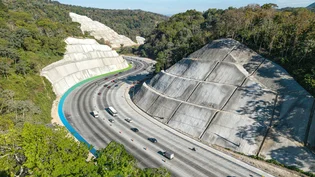
The Second Gotthard Road Tunnel is a massive infrastructure project designed to handle transalpine traffic of up to 17 000 vehicles per day, and Holcim is supplying 300 000 tons of durable, high-performance cement for the build, transported sustainably by rail and e-trucks.
© Daniel Hager

With a recent extension – designed by Sir David Chipperfield – the Kunsthaus in Zurich became the largest museum in Switzerland. Holcim provided low-carbon cement to reduce the building’s carbon footprint and made concrete surfaces brighter.

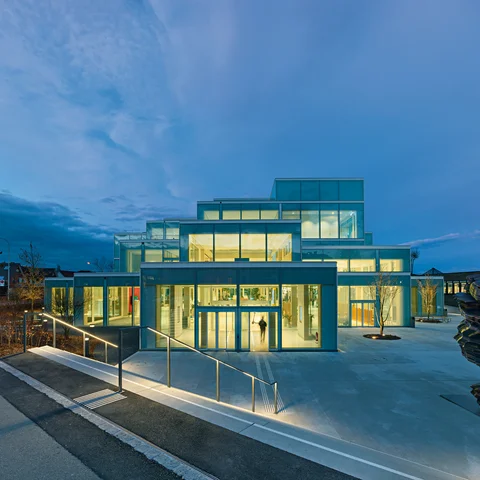
Designed by renowned architect Sou Fujimoto, The SQUARE Learning Center in St. Gallen, Switzerland, is an innovative place to think, learn and work, built with ECOPact low-carbon concrete and Susteno resource-saving cement.

For the Roche Towers in Basel, Holcim supplied a range of sustainable building solutions to realize the striking vision of architects Herzog & de Meuron, such as ultra-high performance concrete and services tailored to this challenging construction.

In Zug itself, where Holcim is headquartered, V-ZUG’s Zephyr Ost building is a cutting-edge manufacturing, assembly and warehousing space built with ECOPact with ECOCycle inside. A pioneering process enriched the recycled concrete with CO2 to permanently bind it.

On a 20 000+ m2 site, Flexbase Technology Center will house the world’s largest, most advanced battery storage system as well as a next-generation AI data center. Its 11 000 m2 photovoltaic façade will support Switzerland's energy transition and long-term energy security. Holcim is supplying 35 000 tons of cement for this landmark project.
1ECOPlanet achieves at least 30% lower GWP (kg CO2e/t, A1-A3 scope) compared with the applicable Ordinary Portland Cement (CEM I/Type I) reference.
2Guarantees a minimum of 10% and up to 100% recycled construction demolition materials by total product weight.
Our stories