

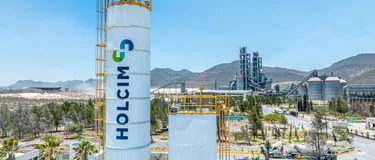
What happens inside a NextGen Holcim plant?

DANIEL REISER
Head of Cement Excellence Manufacturing
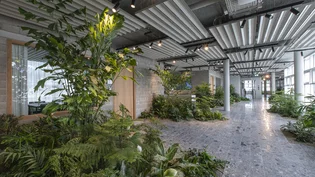
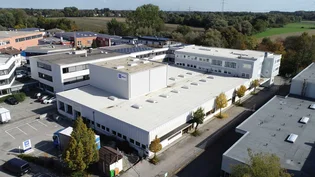
What do you see when you come with me to visit a NextGen Holcim plant? A highly decarbonized, circular and digitally optimized site that serves as the blueprint for Holcim’s NextGen Plant ambition, which forms a core part of our strategy.
Through NextGen Growth 2030, sustainability is driving profitable growth for Holcim, and we’ve committed to our industry-shaping sustainability roadmap. Our NextGen plants are integral to achieving this so that Holcim is a net-zero company by 2050.
Decarbonization is at the core of our NextGen Plant ambition, as we seek to minimize the “clinker factor” – the percentage of clinker in cement – and expand the use of alternative fuels and materials, while integrating solutions with high CO2 reduction potential.
We will achieve this by focusing on three key pillars: Innovation in Materials, Products and Processes, Operational Excellence through Technology, and Future-Ready Workforce. Let’s explore these pillars in more detail.
Innovation in Materials, Products and Processes
Our NextGen Plant 2030 commitments
<400 kg net CO2 per ton of cementitious
Thermal Substitution Rate (TSR) >90%, with >50% biomass intensity in the alternative fuel mix
Clinker factor reduction to < 65%
Formulation
At Holcim, innovation is accelerating decarbonization, and we’re developing and introducing new high-performance, low-carbon cement and concrete formulations. Since the majority of emissions from cement production result from the calcination of limestone into clinker, our NextGen plants are reducing the carbon intensity of clinker production by using more decarbonized materials.
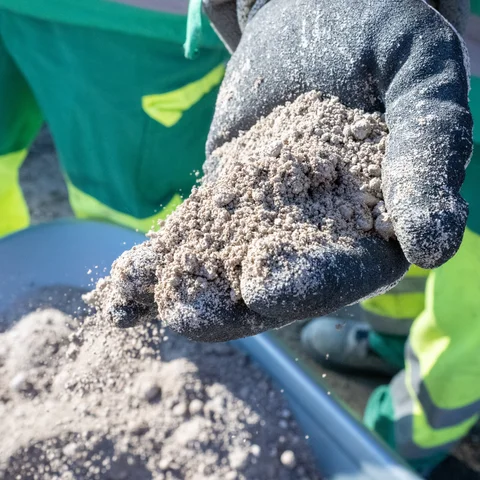
These include basic elements such as calcium, silicon, aluminium, iron and sulfur, but also recycled construction demolition materials (CDM) and waste from other industries including fly ash and steel slag.
We’re also reducing the amount of clinker in our cement by replacing it with innovative mineral components. Our 2030 target is to reduce our clinker factor to 65%, and we’ll achieve this by replacing the clinker with supplementary cementitious materials (SCMs).
These SCMs range from recycled cement paste from CDM and innovative mineral components such as calcined clay, pozzolana, and reclaimed ashes, to waste from other industries including slag and fly ash, and traditional mineral components such as limestone and gypsum.
What I’m really proud of is the work our Holcim teams have done with calcined clay, to reinvent the next generation of cement using this low-emission raw material. Calcined clay can halve the CO2 footprint of cement with no compromise on performance, and it’s one enabling us to scale up our sustainable offering from France to Ecuador, in line with our strategy.
Energy
If you visited one of our NextGen plants then you’d see how we’re actively tackling the other major cause of emissions – energy.
At our NextGen plants we leverage waste-heat recovery, with six operational units already converting excess kiln heat into 97 GWh of clean electricity annually. In addition, we’re developing and deploying renewable energy sources, including solar and wind, on our sites to reduce our dependence on electricity sources that generate emissions.
In Colombia, we’ve reached 100% renewable energy to run our operations, supplied by hydroelectric and solar plants. Securing power purchase agreements (PPAs) is another avenue our NextGen plants are pursuing for long-term clean energy supply.
Turning waste into progress, we’re using alternative fuels, derived from materials at the end of their lifecycle (including biomass residues) to replace traditional fossil fuels. Here, our Geocycle business offers businesses and municipalities waste solutions in accordance with international standards.
Taking a circular approach, we’re reducing the carbon intensity of our cement by substituting fossil fuels with pretreated non-recyclable and biomass waste fuels to operate our kilns. By 2030, our target is to increase our thermal substitution rate (TSR) to at least 50%. We’re advancing innovations to boost this transition, such as piloting oxyhydrogen boosting to enhance the combustion of biogenic fuels.
Holcim is also exploring different methods of electrifying production. We recently announced an agreement with SaltX Technology to co-develop and validate a fully electrified production process for clinker - aiming to build Europe’s first electric cement plant by 2028.


Water
Freshwater is a finite resource, and we’re aiming to reduce water intensity throughout our business operations, implement nature-based solutions beyond our boundaries and treat the water we use when returning it to nature.
Our NextGen plants are aiming to reduce their freshwater withdrawal by 33% by 2030, and Holcim is one of the first three companies globally to adopt science-based targets for nature. We have four targets for freshwater withdrawal reduction, developed using the Science Based Targets Network (SBTN) methodology.
We’re investing in projects and stewardship to reduce water intensity throughout our operations to achieve these goals, and achieving water efficiency through process optimization, reduced leakage, and the installation of water recycling systems. For example, in Morocco, we’ve launched the country’s first ready-mix concrete production using treated wastewater at our Tit Mellil plant, to reduce our freshwater withdrawal by 30%.


Operational excellence through technology
Here the focus is on making our NextGen plants safe, efficient, profitable and resilient by leveraging artificial intelligence (AI) and advanced technologies.
In cement manufacturing, we’re using AI to enhance our asset reliability, energy efficiency, quality and decarbonization through predictive and autonomous systems. Through Plants of Tomorrow, Holcim’s Industry 4.0 program, our teams are modernizing our global plant network by integrating advanced technologies from AI to robotics, while upskilling our people.
For example, Holcim M-Predict uses AI-powered prediction to optimize manufacturing and maintenance efficiencies, driving operational excellence.
We are also deploying AI to ensure our people work in the safest possible conditions. Part of Boots on the Ground - our workforce engagement program - Predict Au is our groundbreaking AI-powered health and safety incident protection model, that uses real-time insights and predictive signals to trigger early interventions onsite, analyzing over 1 500 signals every month to detect high-risk sites with remarkable precision.


Advanced technologies represent a key decarbonization lever that complements our innovative formulations and better energy mix.
Carbon capture, utilization and storage (CCUS), enables us to capture CO₂ emissions onsite for safe storage underground or industrial applications including low-carbon fuels or materials.
Eight Holcim CCUS projects have been selected for grants by the EU Innovation Fund. These CCUS projects at Holcim plants in Europe will enable us to bring near-zero cement and concrete to market at scale from 2030.
We’re also working on other breakthrough innovations, such as accelerating the CO₂ mineralization process, electrification and the use of hydrogen to go even faster on our decarbonization journey. For example, SaltX’s electric plasma technology produces clinker while concentrating carbon emissions from primary materials, enabling more efficient carbon capture.
Future-ready workforce
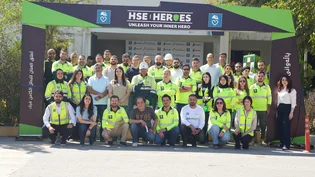
Of course, everything comes down to our people, who are bringing our NextGen Growth 2030 strategy to life, and our NextGen Plant ambition as part of this. To ensure Holcim has a future-ready workforce, we’re equipping them with the skills and knowledge they need to manage complexity, adopt new tools, and execute fast on our strategy.
NextGen Plant 2030 Workforce Strategy
3:1 internal candidate readiness for succession in critical plant roles
Certify 80% of operators and technicians globally
Ensure women make up 30% of key role candidates and over 50% of new talent hires


We are equipping our teams with the skills they need to manage complex operations like high thermal substitution rates, and shifting mindsets from reactive problem-solving to "problem preventing" using AI-driven tools like M-Predict and HLC Plant Autopilot.
Continuous learning is another important focus, and Holcim’s Cement Industrial Academy runs 14 development programs and 10 certification programs for over 600 participants annually.
Additionally, new programs are regularly launched to address needs, such as Operational Technology (OT) and SHE LEADS Operations to strengthen our female leadership pipeline.
Ultimately, Holcim’s NextGen Plant ambition helps motivate me and my teams working in Operations. By innovating in materials, products and processes, driving operational excellence with AI as well as advanced technologies, and upskilling our workforce – we’re supporting Holcim’s industry-shaping sustainability roadmap, and scaling our sustainable offering as the leading partner for sustainable construction.
Our stories