

Plants of Tomorrow
Plants of Tomorrow is Holcim’s successful Industry 4.0 Program to create connected, smart, and energy-efficient sites that use digital solutions to support other decarbonization levers.
Through workforce upskilling and data and AI democratization, we’re evolving the program towards Industry 5.0 or “The Human-Centric Revolution” – based on collaborative partnerships between humans and smart machines, and driven by resilience, sustainability and human-centricity.
- Strengthening performance through Plants of Tomorrow products, creating over CHF 80 million of value annually through the existing 47 solutions.
- Decarbonizing the building industry through our process and quality applications, like Kiln Master and CEMQ, which reduces CO2 emissions.
- Placing circularity at the heart of our sites – by increasing efficiency and optimizing use of energy, water and other natural resources.
- Optimizing cost and modernizing operations through the use of Artificial Intelligence, and rolling out solutions like our M-PREDICT AI tool for predictive maintenance.
- M-PREDICT predicts failures and maintenance requirements based on smart sensors. In selected plants, where we have covered the majority of critical equipment, we’ve achieved a 6% reduction in specific maintenance costs, a 40% increase in mean time between failure (MTBF) and a 1.2 pp increase in equipment availability.
global initiative
Plants of Tomorrow targets a global network of over 100 integrated cement plants and grinding stations across more than 40 countries.
The program brings together a range of innovations aimed at improving performance, circularity and carbon neutrality. We aim to accelerate the adoption of new technologies and solutions across our entire manufacturing process, from quarry to lorry.
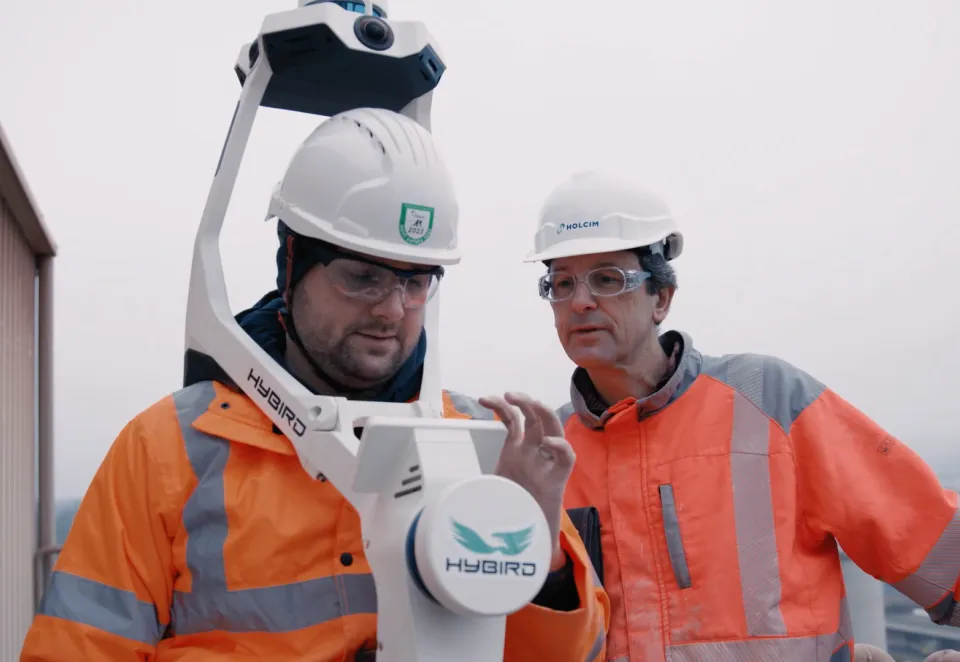
Across our product range we’re driving solutions such as smart sensors and predictive maintenance using AI, unmanned inspections, and process optimization to enhance operational efficiency, sustainability and optimal product quality.
To date, we’ve deployed 2 300 applications across 100 plants, utilizing technologies from automation and robotics to artificial intelligence and digital twins.
Our stories