

How TectorPrint slashed construction time for Europe’s largest 3D-printed residential build
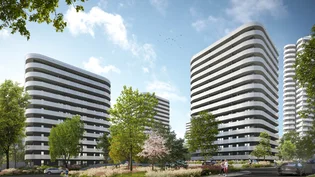
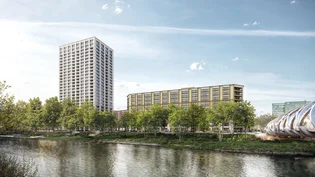
In Bezannes, France, a new landmark is redefining how we think about social housing using Holcim’s 3D printing technology. ViliaSprint², a 12-unit residential building, was finished in just 12 months – showing how our smart building solutions can be used to build NextGen cities.
As the world urbanizes, housing demand in countries like France has never been higher. 3D printing helps us address the housing gap with structures that can be rapidly built using less material – in this case high-performance synthetic macro-fibers to handle floor loads, wind and thermal stress, and replace reinforced concrete – while offering total design freedom.
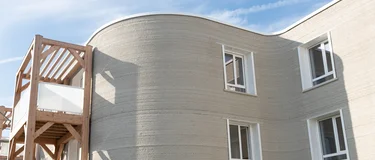
ViliaSprint², which was realized by social housing developer Plurial Novilia and partners, now stands as the largest 3D-printed residential project in Europe. It was built using TectorPrint, Holcim’s advanced 3D printing concrete “ink”.

©Plurial Novilia

©Plurial Novilia

©Plurial Novilia
Breaking Records onSite
Unlike 3D-printed concrete projects that rely on pre-printed elements, ViliaSprint² was printed directly on-site using a COBOD robotic gantry that printed superimposed layers of concrete.
Until now, most onsite 3D printing has been limited to single-storey houses. Here the team broke new ground by printing fully load-bearing walls for the three-storey, 800 m2 structure – eliminating the need for traditional formwork while maintaining full structural integrity.
The result was transformative, with the walls finished in just three months thanks to 3D printing – twice as fast as the walls for the second, nearly identical building that Plurial Novilia built on the same plot as ViliaSprint² using traditional methods. Such speed is a game-changer for a sector where sticking to timelines, or accelerating them, is crucial.
The freedom of 3D printing also allowed the architects, HOBO Architecture, to design a compact, rounded building shape. These curves aren't just aesthetic – they resulted in a 10% reduction in total concrete usage compared to a standard rectangular structure.
"ViliaSprint² marks a major milestone in the exploration of new construction methods,” says Johnny Huat, Managing Director of Plurial Novilia, part of the Action Logement Group, the number one social housing provider in France."
The project has made it possible to concretely assess the contributions of 3D printing to produce housing more quickly and sustainably.
Material science innovation
To achieve this breakthrough, ViliaSprint² used a specialized TectorPrint 3D printing concrete ink developed by the Holcim Innovation Center in Lyon, France.
By optimizing the mix design, the ink achieved a CO2 reduction of 30% compared to standard concrete of the same resistance, aligning the building with the exacting sustainability standards (carbon ceilings) of the 2025 threshold update to France’s RE2020 environmental regulation.
"3D printing in construction is about more than just using a robot. It’s a holistic ecosystem where the material takes on the role of structural autonomy," says Hélène Lombois-Burger, Head of Concrete and Aggregates R&D at the Holcim Innovation Center.
By combining the precision of TectorPrint with our mix design expertise, we are proving that high-performance housing can be both low-carbon and fast to build. We are effectively moving from construction to advanced manufacturing on the job site.

©Plurial Novilia

©Plurial Novilia

©Plurial Novilia
Better onsite working conditions
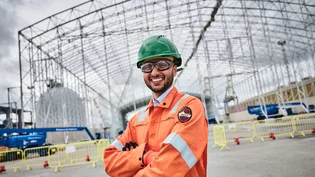
Another advantage of using a COBOD robotic gantry to print ViliaSprint² lay in automating the most laborious tasks we traditionally associate with any build, shifting the focus from physical strain with a larger workforce to high-tech precision.
In Bezannes, three operators managed the process using digital tablets, replacing the traditional six-person crew who would need to perform heavy manual lifts.
"We are addressing the labor shortage – which is a challenge in our industry – by making construction an attractive, tech-driven career," Hélène adds. "It’s about creating a safer, quieter and more inclusive environment for the next generation of builders."
Scaling up further
While Hélène is proud of ViliaSprint² as a major milestone that really accelerated the team’s learning, she insists that it is just the beginning.
"By the end of the build, our 3D printing productivity increased by 35% compared to the start of the build. We’re already carrying that momentum into our next goal: an upcoming 40-unit residential development.
“We want to move from experimentation to a fully competitive scale, reducing costs still further and proving that we aren't just printing walls, but a more sustainable, resilient way of living."
As ViliaSprint² welcomes its first residents, it stands as a testament to what is possible when innovative partners align. By bridging the gap between smart design, digital and sustainable solutions, Holcim is helping to build progress, one layer of ink at a time.
Our stories