


Our net-zero journey
Our industry-leading net-zero pledge includes Scope 1, 2 and 3 targets, validated by the Science Based Targets initiative (SBTi). Addressing both direct and indirect impacts, these objectives will guide our net-zero strategy for decades to come.
Our CO2 footprinT
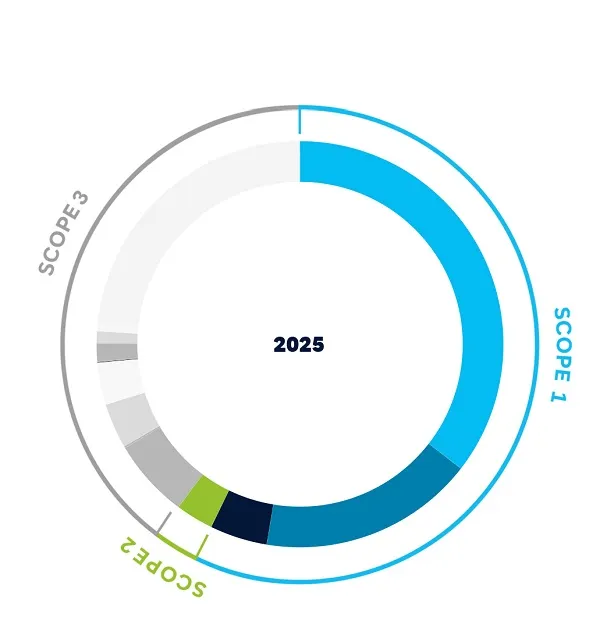
Scope 1 emissions account for 57.1% of our 2025 carbon footprint. Scope 1 includes all emissions released directly from our operations, mainly from cement production. The raw materials we use to produce clinker generate 35.5% of our emissions. Fuel combustion necessary to heat cement kilns represents another major emissions source. A small share of our Scope 1 emissions comes from our aggregates and ready-mix concrete operations.
Scope 2 emissions account for 3.0% of our 2025 carbon footprint. Scope 2 includes indirect emissions from the generation of purchased electricity consumed in the company’s owned or controlled equipment.
Scope 3 emissions account for 39.8% of our 2025 carbon footprint. Scope 3 includes all other indirect emissions generated in our value chain, such as for transportation as well as the extraction and production of purchased materials and fuels. Scope 3 also includes direct emissions from non-consolidated companies and investments.
SHARE OF OUR SCOPE 1, 2 & 3 EMISSIONS
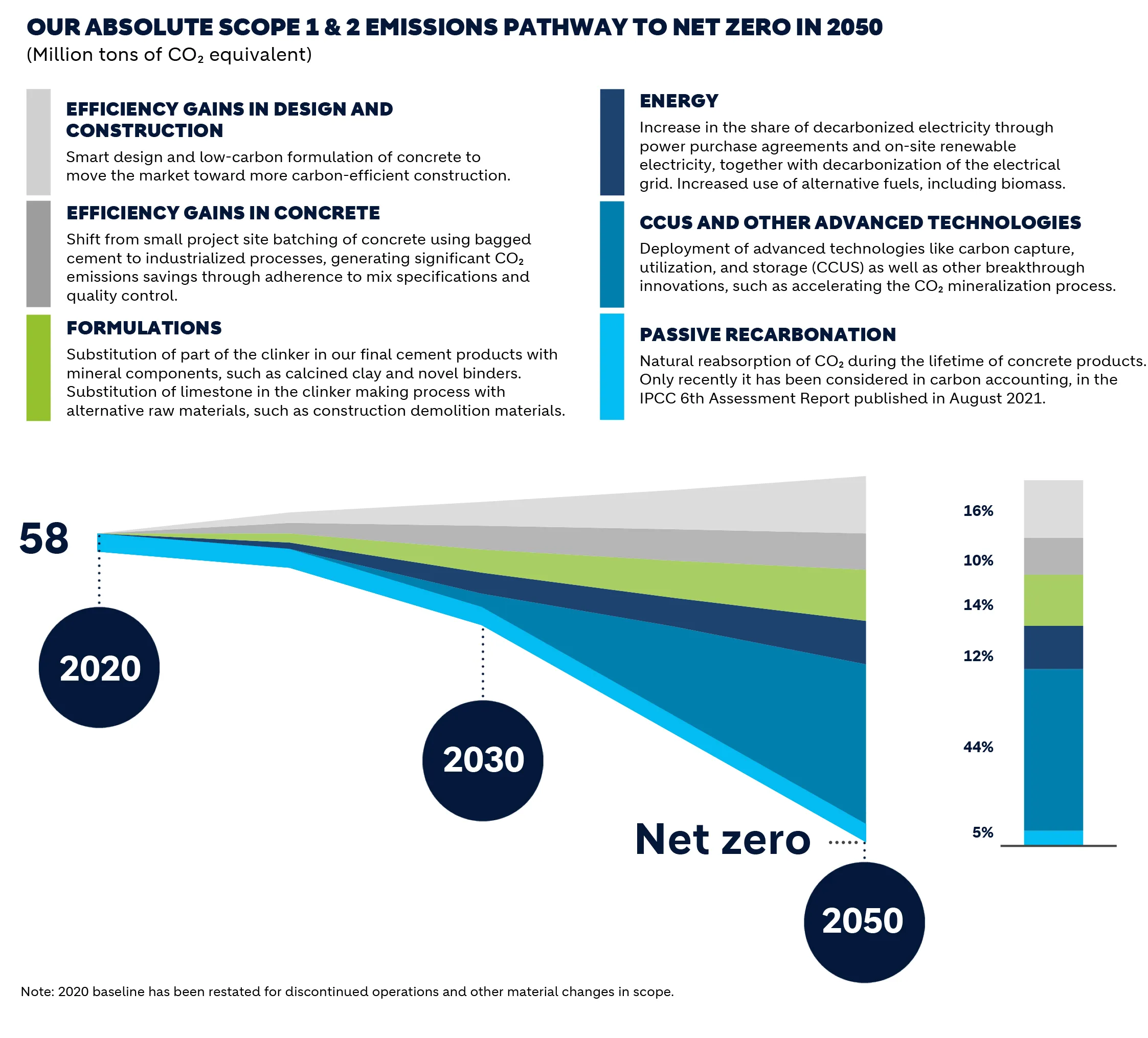
OUR SCOPE 1 & 2 PATHWAY TO NET ZERO
We have a clear and actionable 2050 climate strategy to meet our Scope 1 and 2 targets, as mapped out in the graphic below.
To reach our 2050 targets, we will continue to use our traditional levers, while also scaling up advanced technologies, including carbon capture, utilization, and storage (CCUS).
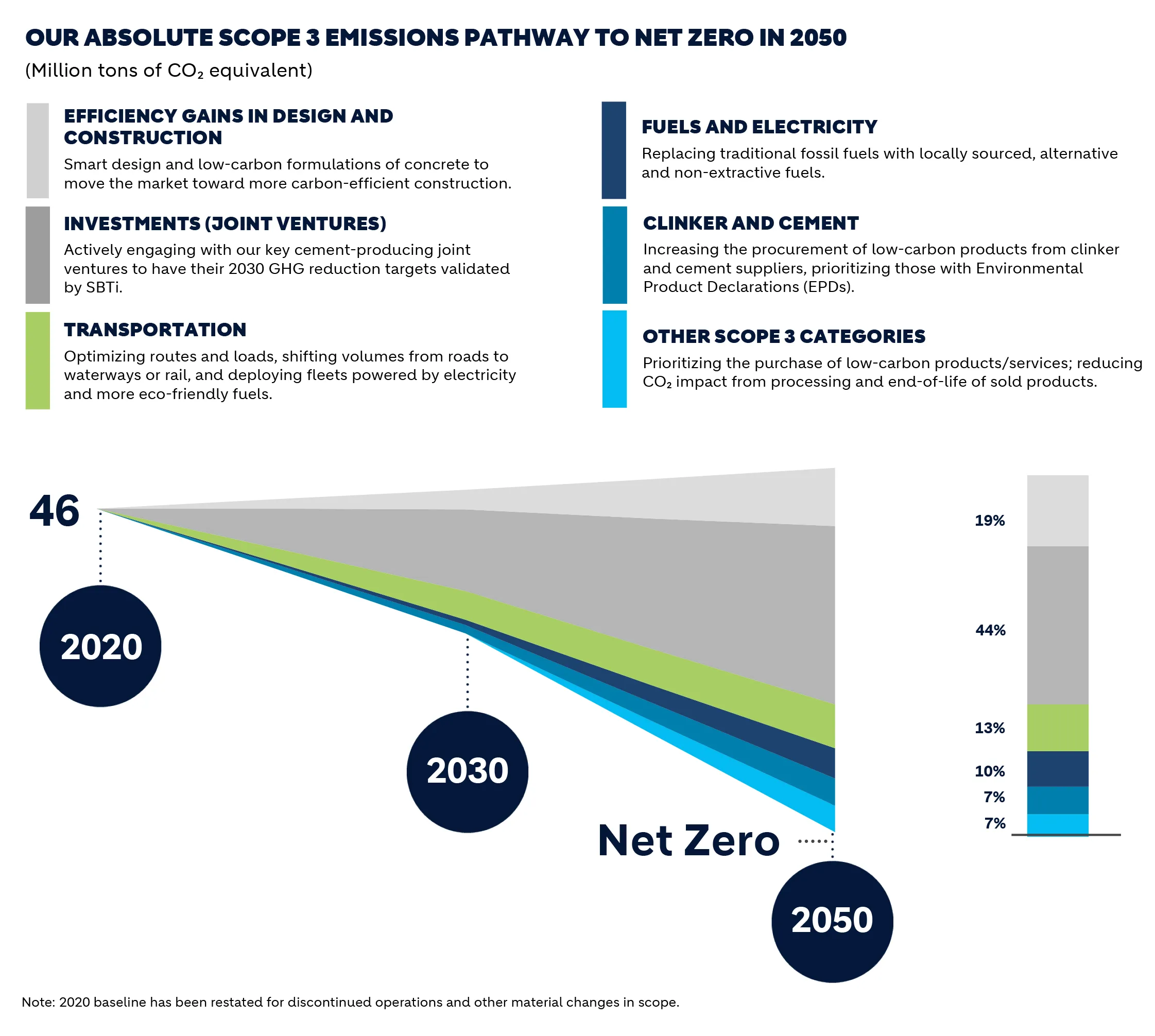
OUR SCOPE 3 PATHWAY TO NET ZERO
On top of the decarbonization of the electrical grid, a range of factors are involved in reducing our Scope 2 emissions to net zero:
WASTE HEAT RECOVERY
Repurposing excess heat from cement kilns to generate electricity, with plans to significantly increase the number of waste heat recovery units we own by 2030.
SOLAR, HYDRO- AND WIND POWER
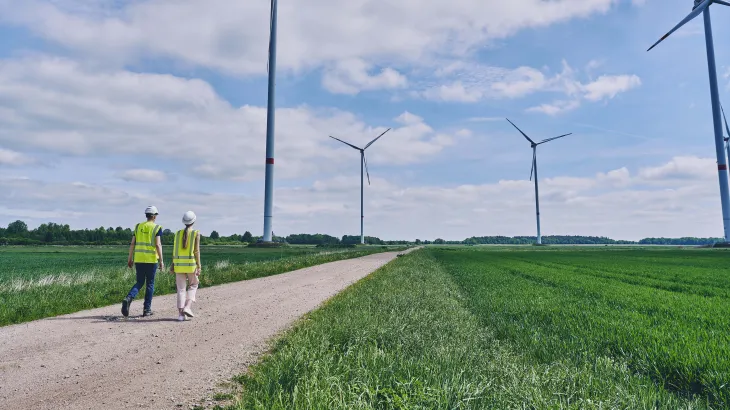
Continuing to expand our renewable energy portfolio by collaborating with power producers.
POWER PURCHASE AGREEMENTS
Modernizing kilns to lower CO2 levels and using digital solutions to create connected, smart and energy-efficient sites that will complement our other decarbonization levers.
With our Scope 3 intermediate targets validated by SBTi, we are prioritizing the following actions to reduce emissions in this category:
INVESTMENTS (JOINT VENTURES)
Actively engaging our principal cement-producing JVs to have their 2030 reduction targets validated by the SBTi.
PURCHASED CLINKER AND CEMENT
Requiring our clinker and cement suppliers to provide the CO2 information related to their products through Environmental Product Declarations (EPDs).
FUELS AND ENERGY
Replacing traditional fossil fuels with locally sourced, alternative and non-extractive fuels.
DOWNSTREAM TRANSPORTATION
Moving volumes from road to waterways or rail transportation, and deploying fleets powered by electricity and more eco-friendly fuels.
OTHER PRODUCTS AND SERVICES Including CO2 requirements in the tendering process and integrating CO2 as a parameter in our “Total Cost of Ownership” models used to drive purchasing decisions.
How we are making it happen
MORE STORIES