

With population growth and with urbanization on the rise, we have to rethink the way we build cities. Finding ways to decarbonize the construction phase of a building’s lifecycle is critical to reaching the world's climate targets.
As the main ingredient in concrete, cement is an essential building material to accommodate the demand for new buildings. Decarbonizing cement and concrete is therefore critical. Producing near-zero cement starts with low-carbon formulation; substituting limestone with innovative raw materials such as calcined clay. Using decarbonized energy is another lever for lowering emissions from cement production. Once these first two decarbonization levers have been deployed, carbon capture, utilization and storage (CCUS) plays an essential role for managing the remaining, unavoidable carbon dioxide (CO2) emissions.
Harnessing advanced technologies like CCUS is a game-changer to meet long-term climate goals. At Holcim, we are on a mission to decarbonize building, to shape a net-zero future that works for people and the planet. Our advanced CCUS roadmap positions us uniquely as the right partner to scale up net-zero cement around the world.
But what exactly is CCUS, how does it work and how can different CCUS technologies help us reach global climate goals?
HOW CCUS WORKS
The process involves capturing CO2 emissions before they are released into the atmosphere, and either safely storing it or utilizing the CO2 in various applications.
CCUS allows us to reduce greenhouse gas emissions from sectors with unavoidable process emissions, such as cement, offering a viable pathway towards meeting global climate goals and transitioning to a net-zero economy.
There are several mature carbon capture technologies with the potential to decarbonize cement production:
Permanent, safe CO2 storage
In today’s cement manufacturing process, the unavoidable process emissions mean that reaching net zero is not possible through decarbonated formulation and energy alone. But, by carefully capturing these remaining emissions, and permanently sequestering the CO2 in secure and safe underground formations, we can avoid its release into the atmosphere.
The storage of CO2 can be done both onshore and offshore; it can be in saline aquifers, depleted oil and gas reserves, or even in ultramafic rock formations where the CO2 mineralizes creating new rock.
Access to storage is varied, but the good news is that with development of the CCS market and the support of governments (such as through the Net Zero Industry Act), more CO2 storage options are being identified than ever before. And this in turn means that cement manufacturers have more chances to find a CCS pathway that can help them to reach net zero.
Rethinking CO2 as a resource
To understand CCUS, we need to start by rethinking carbon. Because of the outsized role carbon emissions play in climate change, today, carbon tends to be viewed purely as a waste product that contributes to global warming and is harmful to the environment. Yet it is also an essential resource.
Carbon is the main element for many chemical products, as well as for a large variety of products from food to materials. During the last two centuries, the main source of carbon was non-renewable fossil resources. For the world’s production to be more sustainable, we have to consider alternative carbon sources and production pathways.
One source of carbon is concentrated CO2 from the unavoidable raw material-based emissions of industrial production sites. It is possible to capture this CO2 before it enters the atmosphere and recycle carbon to produce things like carbonated drinks, plastic chairs and nanotubes in electronic devices.
HOLCIM'S CCUS PATHWAYS
Different CCUS technologies can be deployed in many different places around the world. Options for the capture, transport, utilization and storage of CO2 vary from one site to another, and the regulatory environment differs from one country to another.
At Holcim, our comprehensive, bottom-up approach allows us to tailor pathways and value chains based on local conditions, ensuring cost-effective, viable and scalable solutions.

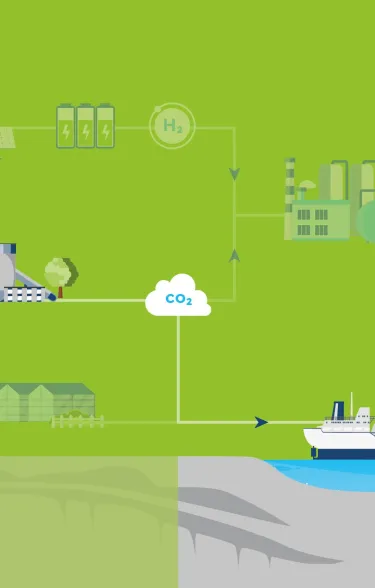
FOUR PATHWAYS
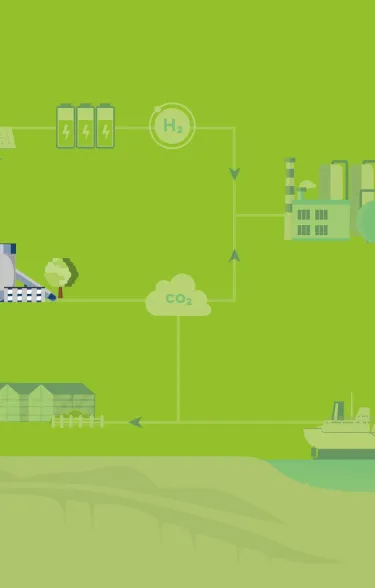
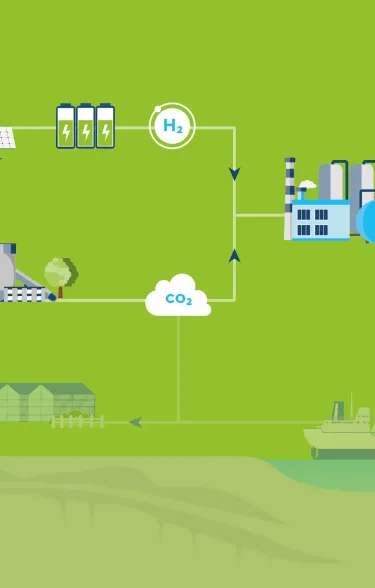
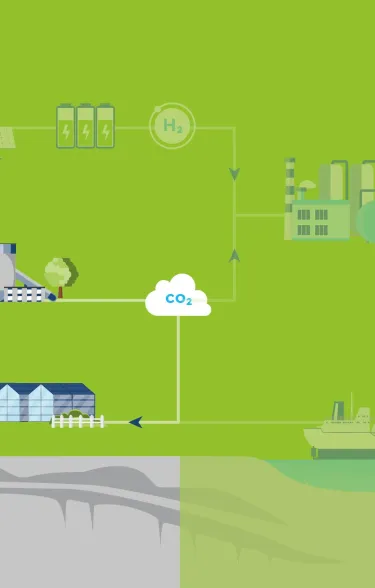
Our projects span four main storage and utilization pathways.
1. MINERAL CARBONATION
Mineral carbonation, also known as CO2 mineralization, is a form of utilization through which CO2 is reacted with minerals to form carbonates, storing the CO2 permanently. In the cement sector, this reaction provides a way of using captured CO2 as part of a raw material to produce new building materials.
2. CONVERSION UTILIZATION
We are exploring new pathways to use CO2 in the production of fuels, chemicals and plastics. CO2 can be repurposed by reaction with green hydrogen to produce fuels that can decarbonize the aviation and maritime sectors, or can be used to produce chemicals and plastics.
3. MERCHANT MARKET UTILIZATION
Captured CO2 can be used for greenhouse plants as a crop growth enhancer or in the food and beverages industries, for example for beverage carbonation.
4. STORAGE
CCUS technologies capture CO2 from a facility. It is then transported to a location where it can be safely stored underground in deep geological formations. CO2 can be transported by pipeline, train, ship or truck, for storage in depleted oil and gas reservoirs, or saline aquifers.
OUR CCUS ROADMAP
We are scoping CCUS around the world based on mature technologies, robust partnerships and value chains. As of November 2025, Holcim has eight CCUS projects supported by the EU Innovation Fund. Collectively, these projects will allow us to supply our customers with over 8 million tons of near-zero cement.

EXPLORE SOME OF OUR CCUS PROJECTS AROUND THE WORLD


Lägerdorf, Germany
The Carbon2Business project aims to capture CO2 from our plant at Lägerdorf and repurpose it as an industrial raw material, together with partners thyssenkrupp Industrial Solutions AG and Linde Engineering. Using a Carbon Processing Unit and a first-of-its-kind implementation of oxyfuel technology, the project sets a new standard in low-carbon cement production and industrial climate innovation.
Pathway: conversion utilization
Annual CO2 capture: around 1.2 million tons
Kujawy, Poland
The GO4ECOPlanet project will take flue gas from our cement plant in Kujawy and process it in a CO2 capture plant which produces 99.9% pure CO2 using Air Liquide’s Cryocap™ FG technology. The installation will capture 100% of CO2 emissions from clinker production and the CO2 will be transported to and stored in depleted oil and gas fields.
Pathway: storage
Annual CO2 capture: around 1.2 million tons
Koromačno, Croatia
KOdeCO net zero aims to create a CCS chain from Holcim's Koromačno cement plant to the first permanent offshore storage in the Mediterranean Sea, which is essential to transform industry in the south of Europe. The project is a large-scale industrial demonstration of disruptive "Cryocap" technology that at plant level will bring 20% electricity savings, higher efficiency, circularity of condensate and reduced water consumption, while using 90% renewable electricity.
Pathway: storage
Annual CO2 capture: around 366,000 tons
Le Teil, France
A partnership with Elyse Energy, eM-Rhône project will produce e-methanol using renewable hydrogen production and CO2 captured from our plant in Le Teil. E-methanol is a valuable platform molecule for various chemical projects and a low-carbon alternative fuel. The project will establish the first large-scale e-methanol plant in France, which will produce 138kt every year.
Pathway: conversion utilization
Annual CO2 capture: 195,000 tons
Obourg, Belgium
In Belgium, the GO4ZERO project will deploy an innovative air-oxygen switchable kiln with carbon purification technology at Holcim's cement plant in Obourg. It will ship the purified CO2 via the Fluxys network for sequestration under the North Sea.
Pathway: storage
Annual CO2 capture: around 1.1 million tons
Milaki, Greece
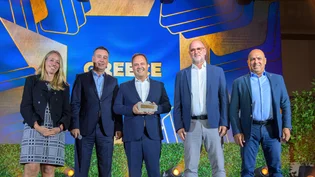
The OLYMPUS project will be an important part of Holcim’s European decarbonization roadmap, while enabling the development of storage capacity in southern Europe. Here we are developing a new scalable and replicable technology (“OxyCalciner & CryoCap Oxy” combination), allowing low capture variable cost, and transforming the plant into a net carbon removal site by implementing this highly innovative technology combination.
Pathway: storage
Annual CO2 capture: around 1 million tons
SCALING UP CCUS
To establish CCUS as a long-term solution to meet climate targets, collaboration is essential. And this starts with sorting fact from fiction to unlock the business case for CCUS.
CCUS technology is well regulated and scientifically proven to be safe. In the United States, carbon has been safely and reliably transported since 1972. Even in the unlikely event of a leak during transport, there is very little human health risk when pure CO2 is released into ambient air.
CCUS technology costs are rapidly declining, bolstered by policy and financial incentives. The IPCC estimates it would be 138% more expensive to reach global climate goals without the deployment of CCUS. Holcim's CCUS projects are designed to deliver positive financial returns.
Collaboration across the value chain
The momentum for the deployment of CCUS has grown substantially in recent years, with around 700 projects in various stages of development across the CCUS value chain in different industries.
We understand that when it comes to accelerating the adoption of CCUS, we cannot do it alone. We need deep collaboration and strong partnerships between public authorities, private companies, local stakeholders and other value chain partners to secure the development of technologies. That is why we are working in close collaboration with our partners across our portfolio of projects.
Working with other multinationals as well as start-ups, our objective is to create a portfolio of diverse and cost-effective solutions that can be scaled up across the company to advance our decarbonization journey, with the aim of having our first projects in operation by 2030.
Our stories