

Restoring mangroves with social impact in Ecuador
As climate’s greatest ally, nature absorbs half of global carbon emissions every year. Mangroves are critical to this natural process – as wetland ecosystems that sequester vast amounts of carbon in soils and biomass, supporting rich biodiversity.
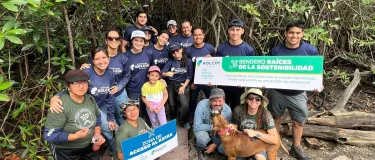
Building a nature-positive future and accelerating social impact are central to Holcim’s NextGen Growth 2030 strategy. That’s why together with Fundación Proyecto Social we’ve launched a community mangrove nursery in Puerto Hondo – Ecuador’s first community-led initiative that restores the country’s vital mangrove ecosystem while creating sustainable livelihoods.
Mangroves also serve as important natural barriers, protecting coastal regions from the devastating effects of erosion and storm surges, while they are also breeding grounds for a diverse array of fish, crustaceans, and birds, thereby sustaining marine biodiversity.
Despite their immense environmental and economic value, the world’s mangroves are under constant threat. In Ecuador’s Guayas region alone, more than half these vital forests have been lost due to unsustainable practices and urbanization, which motivated Holcim to run this project.


Restoring ecosystems, strengthening livelihoods
Puerto Hondo’s community mangrove nursery was developed to restore one of Ecuador’s most threatened ecosystems, the mangrove, while strengthening the livelihoods of local families.
The project is an urgent response to the ecological degradation of the Guayas region. By training 22 community members in mangrove biology, seedling collection, and sustainable agroforestry, the team has successfully created new income opportunities through the sale of seedlings and professional reforestation services.
Rather than treating environmental restoration as a goal isolated from the community, the project integrates social inclusion, environmental health, and economic independence. A key highlight is a commitment to women – 80% of participants – and youth to ensure they benefit.
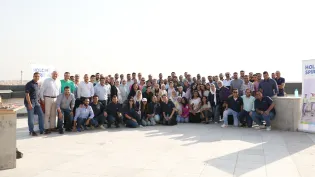
The initiative has also become a focal point for corporate-community collaboration with over 50 Holcim employees contributing over 600 hours of support.
“As the only mangrove nursery in Guayaquil, it pioneers an innovative, community-driven model that links ecosystem restoration with ethical livelihoods,” Elcira says.
Lasting ecological and economic legacy
The Puerto Hondo initiative has already strengthened the ecological connection with nearby Bosque Seco Tropical, creating a natural corridor that allows species to thrive in a protected environment.
Beyond its ecological benefits, the project also addresses a critical supply gap by providing the only consistent source of mangrove seedlings in Ecuador, enabling large-scale restoration efforts across Guayaquil and beyond.
“So far, the numbers already speak for themselves when it comes to the positive environmental impact we had in the first six months alone: almost 5,000 mangrove seedlings were produced, creating a solid foundation for large-scale restoration.
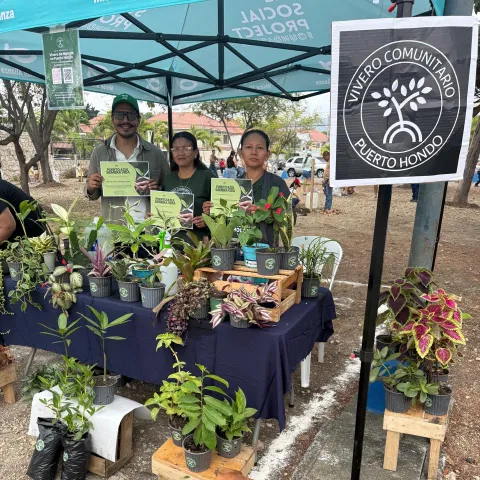
“These seedlings have the potential to capture around 2,300 metric tons of CO2 per year in long-term carbon sequestration, contributing to climate change mitigation and ecosystem resilience,” Elcira says.
The project also generates employment and skills for 22 local families (with 88 direct beneficiaries) and provides vital ecosystem services to over 36,700 residents of Chongón. In its first seven months, the nursery generated more USD 4,000 in revenue for the community.
As a community-owned enterprise, the nursery reinvests its profits into maintaining operations and improving production, positioning conservation as a truly viable source of income – further encouraging residents to protect their natural surroundings.
“By merging ecological restoration, education, and entrepreneurship, this project stands as a replicable blueprint for climate adaptation. It protects a vital ecosystem that benefits all coastal communities while ensuring that the protection of nature remains an economically rewarding path for generations to come,” Elcira says.
Our stories