


5 construction innovations to watch in 2026

EDELIO BERMEJO
Head of Global R&D
As we enter 2026, global megatrends such as rapid urbanization and population growth are fundamentally reshaping the built environment. With the world building the equivalent of Madrid every week, the construction industry must embrace innovation to meet demand and build the infrastructure, industry and buildings we all need.
Here are five construction innovations that will define our sector in 2026, where Holcim is at the forefront as the leading partner for sustainable construction.
1. Embracing the power of biochar
Biochar has the potential to help the construction industry make a radical shift, as a bio-based material that actively sequesters as well as reduces emissions.
Biochar is produced by transforming organic waste into a charcoal-like material through pyrolysis, the chemical decomposition of organic materials using heat in the absence of oxygen. This process “traps” carbon that would otherwise have been released as CO2 as the organic matter decayed, and each kilogram of biochar prevents the release of up to three kilograms of CO2.
Biochar can be embedded in cement, concrete and mortars to reduce their carbon footprint with no compromise on performance. We’ve proven this through multiple pilot projects, including with Pritzker Prize-winning architect Alejandro Aravena and his firm ELEMENTAL during the 2025 Venice Biennale of Architecture, where we used biochar concrete to build a full-scale net-zero Basic Services Unit housing prototype.
Another breakthrough trial was with London’s Canary Wharf Group, the developer behind the largest urban regeneration project in Europe, where we used biochar made from forestry residues and used coffee grounds to develop Holcim’s first net-zero concrete. The custom mix has a carbon footprint of -14 kg of CO2 per m3 (net GWP A1-A3).

Mainstream applications of biochar are becoming more widespread. Our customers no longer view biochar as a niche experimental additive, but as a high-performance material to reduce emissions. Reassured by successful large-scale proofs of concept, developers are recognizing that biochar-based materials offer a tangible way to reduce embodied carbon while maintaining the structural integrity their projects demand.
2. Scaling calcined clay

With growing demand for low-carbon building solutions, calcined clay will be a key ingredient in more and more cement formulations in 2026. This supplementary cementitious material (SCM) can halve the CO2 footprint of cement with no compromise on performance, and it reduces dependence on traditional low-emission SCMs such as slag and fly ash, industrial by-products that are becoming increasingly scarce or expensive.
As with biochar, we’re seeing a positive trend in market adoption, with our customers embracing calcined clay cement in projects around the world, from Mexico to Italy.
Holcim is ramping up production of calcined clay to meet growing demand, with dedicated production lines in France and the Czech Republic, while we continue to retrofit clinker kilns to produce calcined clay. We expect to reach 1 million tons of calcined clay cement produced in 2026.


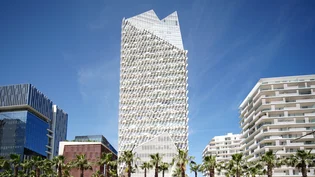
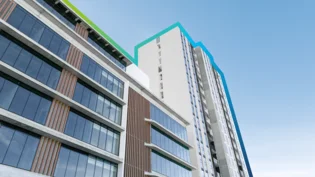
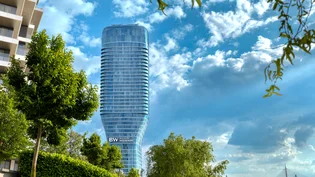
CityWave office complex in Milan, Italy | ©BIG

3. Recycling concrete with advanced crushing
With our proprietary advanced crushing technology, Holcim is able to recycle used concrete back into aggregates and cement paste - closing the material loop and bucking an industry trend that previously saw the majority of waste concrete used as low-value road base or backfill.
Holcim has technologies that break down concrete along its natural lines of heterogeneity, aiming to separate the individual components – aggregates and cement paste – as much as possible. We can then recycle the aggregates back into concrete and the cement fines back into cement for use in our sustainable offering.
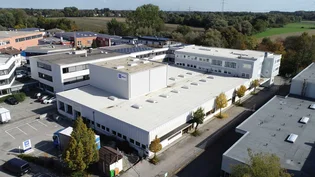
For example, at our recycling center in Bürglen, Switzerland, we built a smart crusher to scale our production of ECOCycle1-labeled concrete. By recovering the cement fines for use as a carbon-free addition to cement, and returning clean aggregates to new concrete, we’re building NextGen cities of tomorrow today using recycled construction demolition materials.
1 ECOCycle, Holcim’s proprietary circular technology, guarantees a minimum of 10% and up to 100% recycled construction demolition materials by total product weight.


4. Innovating to reduce freshwater withdrawals
Freshwater will be another key focus for the construction industry in 2026, as a finite resource in a world where water security is a top priority for people and communities as well as businesses.
At Holcim we’re targeting a 33% reduction in our freshwater withdrawal by 2030. One way we’re addressing this target is by moving beyond simple conservation to a model of industrial symbiosis, which involves a radical rethinking of our supply chain, since one industry’s "waste water” is a vital resource for another.
Our "Every Drop Builds" initiative in Ecuador serves as a blueprint for this transition. Partnering with beverage producer Tesalia in Guayaquil, we’ve created a circular loop where water treated at their facilities is repurposed for concrete production at our San Eduardo plant. This partnership alone will reduce our onsite freshwater usage by 41,000 m3 — the equivalent of 28 Olympic-sized swimming pools.
We’ve already expanded this industrial symbiosis to other industry partners such as Bimbo and Oletnat, allowing us to reuse an additional 40,200 m3 of treated water in our ready-mix production.
Beyond Ecuador, Holcim Mexico and Holcim Morocco are running similar initiatives with local water suppliers, and in2026 these cross-industry partnerships will be a key driver of our water strategy. By integrating our operations with the water cycles of our neighbors, we’re not only reducing our freshwater withdrawals from the environment, we’re building a more resilient, nature-positive industrial ecosystem that protects local watersheds for the communities where we operate.

5. Accelerating 3D concrete printing
For several years now, 3D concrete printing has moved from the realm of architectural novelty to scalable industrial solution. This trend will continue apace in 2026. The technology optimizes material use, and therefore cost, by allowing us to build better with less and avoid overly complex structures. It also allows large-scale projects to be built up to 50% faster versus traditional construction, while enhancing logistics thanks to onsite printing.
The scale of 3D-printed concrete projects is expanding rapidly. We’re no longer just printing decorative facades or small-scale prototypes: 3D printing is now being used for major developments and essential structural elements such as load-bearing walls. ViliaSprint2 in France is Europe’s largest 3D-printed residential building, for which Holcim developed a custom fiber-reinforced TectorPrint concrete ink. The load-bearing walls for this 800 m2, three-story social housing residence were printed in just 34 working days.

This versatility is unlocking a widening array of applications. Beyond residential and commercial buildings, we’re seeing 3D printing deployed for infrastructure as well, from complex bridge components to water tanks.
What’s the one thing these five innovations have in common? Scalability. Within our R&D network at Holcim, this is an essential quality we look for as we strive to be the leading partner for sustainability construction.
Holcim is moving these technologies out of the lab and onto the job site at a global scale. In 2026, the challenge is no longer proving that sustainable construction is possible, but accelerating its adoption to meet the needs of people and the planet.
Our stories