

Building Icons: Architect Albert Achammar on the future of circular refurbishment in Vienna
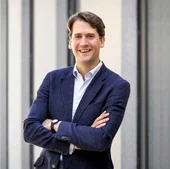
ALBERT ACHAMMAR
CEO, ATP architects engineers
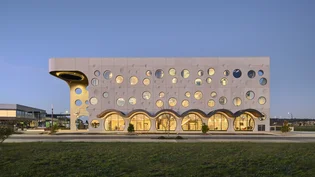
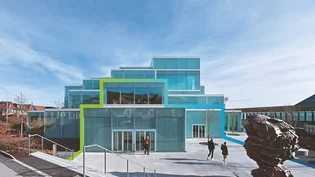
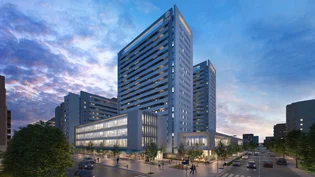
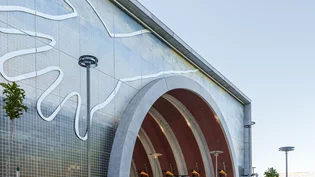
Near Vienna’s historic Belvedere Palace, the newly refurbished European Patent Office (EPO) stands as one of Austria’s most sustainable and circular buildings, thanks to Holcim’s ECOPact low-carbon concrete with ECOCycle® circular technology inside.
ATP Architekten Ingenieure planned this iconic refurbishment, and CEO Albert Achammar chatted to Holcim about his firm’s involvement in the project, which involved retaining the building’s original concrete skeleton, then rebuilding it from the ground up.
Albert, tell us a little about your vision for the European Patent Office renovation.
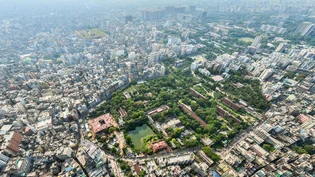
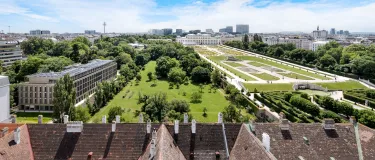
We were focused on creating a dialogue between the rebuilt EPO building and the very old urban context around it, including a 300-year-old castle and monastery, and Vienna’s first botanical garden. Our project was right in the middle of this history, so we aimed to create a building in harmony with its surroundings, and between the old and the new.
How did you prioritize sustainability during this project?
Sustainability is a really important aspect in our work in general, but particularly for this project. We carried out an analysis and realized that we could keep the superstructure of the building intact, rather than completely demolish it – resulting in carbon savings of 50% to 60% compared to building an entirely new structure. Saving embodied carbon is one of the best things you can do from a sustainability angle in construction. The EPO building was already 50 years old, and our work has extended its lifespan for another 50 years or more.
We also considered what kind of materials we could use to further reduce the building’s embodied emissions. For example, we looked at cement with a very good CO₂ value, among other materials. Energy efficiency was also a big focus. We created a storage system by drilling deep into the floor, which increased the building’s efficiency. In addition, we made sure to keep the well-being of the people who work in the building front of mind, as that is equally as important as the building’s ecological footprint. This made it possible to create a net-zero building that works for its people, while setting the highest sustainability standards in the German speaking region.


Can you describe the value Holcim brought to the construction process?
Large building material producers such as Holcim play a crucial role in decarbonization and circular construction. This is because they are at the forefront of research and developing new materials. They have a huge amount of data, not only on the physical properties of new materials, but also on CO₂ impact, for example. Holcim provided us, as planners, with the tools to make much better decisions much earlier in the design process.
It's quite important to bring all necessary elements to the table when trying to make informed decisions over a building’s entire lifecycle. I would never put a building materials producer last in the process. You need to bring them in at the beginning to make these informed decisions and create a better building environment. They are the ones providing the actual materials that will go into the building, and the information they can bring to the initial planning process is crucial to the project’s overall outcome. Carrying out construction projects sustainably would be impossible without them.
Holcim helped make the design a reality by providing its sustainable building solutions: ECOPact low-carbon concrete containing its ECOCycle® circularity technology to reduce construction emissions and close the material loop, and Elevate Isoguard™ insulation for improved energy efficiency. Thanks to these innovative materials, the building has received the BREEAM “Outstanding” certification for its sustainable design, achieving the highest score of any project in Austria to date. In addition, through solar panels and geothermal pumps, the building generates more energy than it uses, serving as a sterling example of sustainable design.
Did you know?
With 80% of current buildings still expected to be in use by 2050, the market for energy-efficient repair and refurbishment is thriving. Holcim offers high-value, sustainable building solutions to meet this need – from ECOPact and ECOCycle to Tector advanced mortars, PRB facades and insulation, and roofing systems from ZinCo and Elevate.
Our stories